01
Product Definition
We turn business goals and loosely defined ideas into a clear product concept, requirements, delivery plan, and technical architecture.
You do not need a complete specification, a finished architecture, or even the right technical vocabulary. Tell us what you want to achieve, show us what you already have, or describe what is not working. Task Force 38 will define the product, engineer the solution, build it, and take it to production.
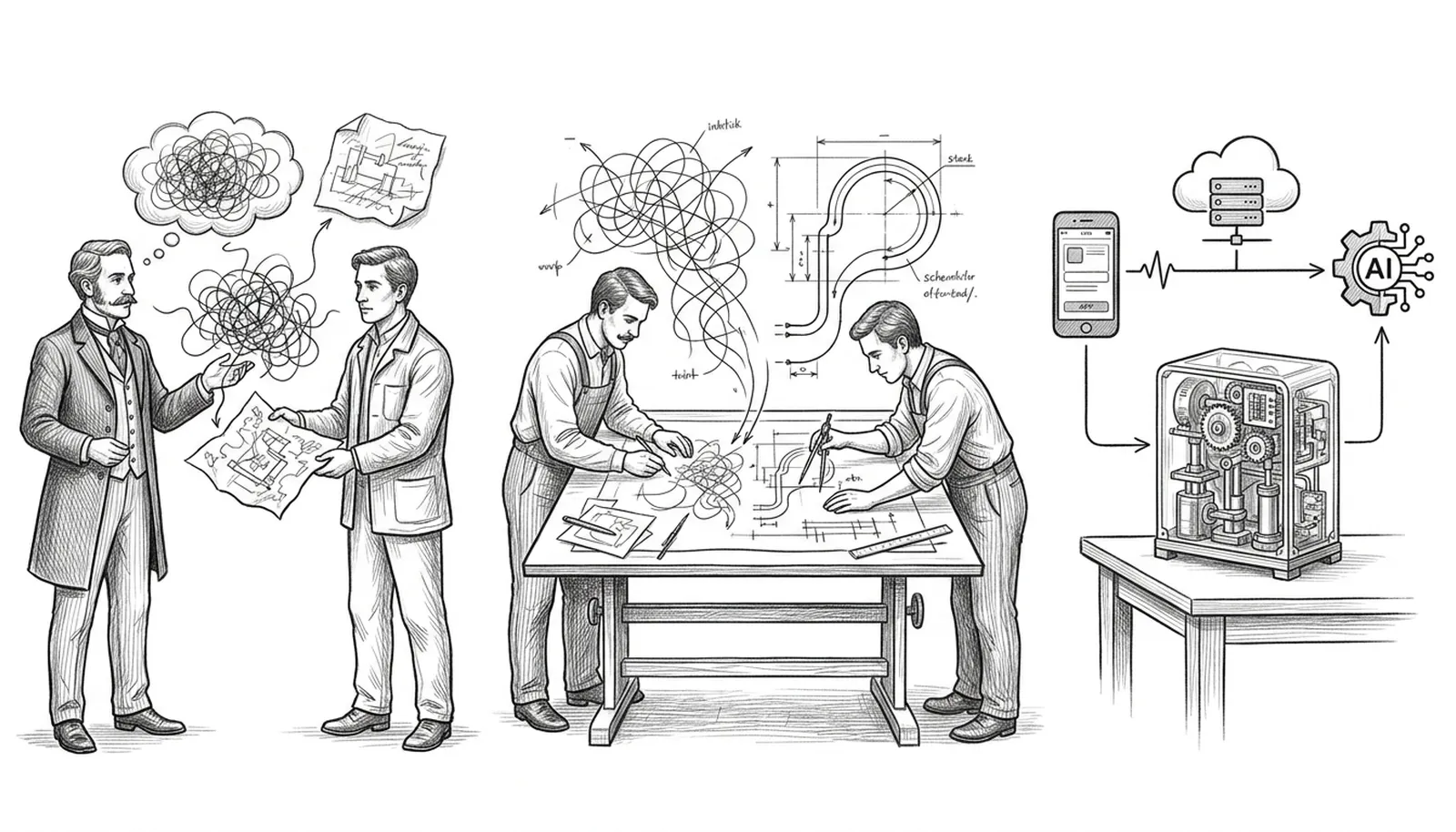
The Manifesto
They arrive with a business goal, a technical obstacle, an unfinished prototype, a product that no longer scales, or an idea that has never been translated into engineering terms.
That is enough.
We ask the right questions, define the actual product, make the necessary technical decisions, and accept responsibility for delivering a working system.
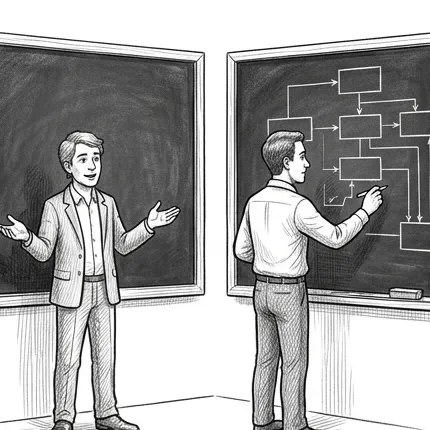
What We Do
01
We turn business goals and loosely defined ideas into a clear product concept, requirements, delivery plan, and technical architecture.
02
We design and build the complete system across embedded, mobile, backend, cloud, and AI components.
03
We handle integration, testing, deployment, observability, security, reliability, and the practical work required to launch.
04
We support the product after launch, resolve production issues, improve performance, and build the next generation.
How We Work
 1
1
Describe the problem, the user, the desired result, and what you already have.
 2
2
We ask questions, research the context, and turn it into real requirements.
 3
3
We own the architecture, technology choices, and technical risk.
 4
4
The result is a system ready for real use, not just a demo.
 5
5
Support, scaling, optimization, and the next generation.
Capabilities
Firmware, embedded Linux, sensors, connectivity, and device security.
Native and cross-platform apps, device integration, secure communication.
APIs, data pipelines, infrastructure, and scalable services.
LLM systems, multi-agent systems, retrieval, and production AI integration.
Device-to-cloud systems that work as one coherent product.
Why Task Force 38
We begin with the result the client needs, not with a predetermined technology or a menu of developer roles.
Unclear requirements are not an obstacle. Turning them into a buildable product is part of the work.
We do not optimize one component while ignoring the product around it.
A prototype proves an idea. A product must survive users, failures, updates, security requirements, and operational reality.
Each engagement is staffed according to the actual problem rather than forcing every project through a permanent oversized organization.
Architecture and critical engineering decisions are made by experienced practitioners who remain involved throughout delivery.
Letters to the Editor
“We have a sensor prototype, but we do not know how to turn it into a commercial product.”
“Our mobile application works, but the device connection is unreliable.”
“We want to add AI to an existing workflow, but we do not know where it will actually help.”
“Our previous team built a prototype that cannot be deployed or maintained.”
“We need a system that connects a physical device, a mobile application, and a cloud service.”
“We understand the business problem, but we do not have a technical specification.”
Any of these is a valid starting point.
Describe the problem in your own words, and we will help determine what should be built.
Bring Your Own Problem